2026-05-29
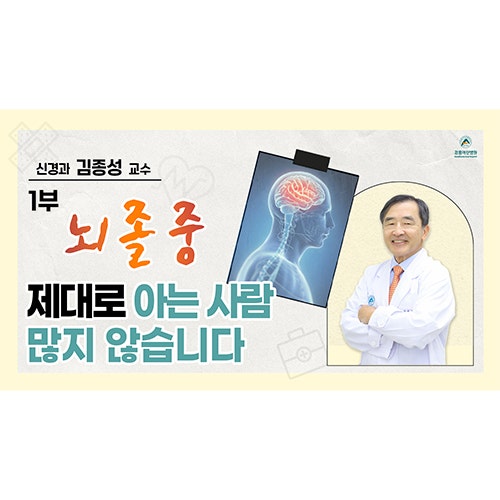
[Smart Doctor] Stroke: Not Many People Truly Understand It! | Stroke Part 1
Learn about the definition, risk factors, and emergency response for stroke. Understand why immediate hospitalization is critical when symptoms occur.
![[Smart Doctor] Stroke: Not Many People Truly Understand It! | Stroke Part 1](/uploads/hi_gnah/224027041634/33bc1bcda08c2236.png)
Q. What is a stroke?
‘Stroke’ is one of the diseases that occurs within the brain. Of course, like other organs, the brain can develop cancer, be injured, or suffer from inflammation. However, a stroke specifically refers to a problem with the blood vessels in the brain where they either become blocked or burst. When this happens, blood cannot reach that specific part of the brain, causing damage to the brain tissue and preventing it from performing its normal functions. In short, ‘stroke’ is a collective term for a condition where sudden neurological symptoms—such as paralysis, loss of sensation, dizziness, or inability to speak—occur due to vascular issues in the brain.
Q. What are the main risk factors for stroke?
Since it is a disease where brain vessels are blocked or ruptured, any factor that damages these vessels is a risk factor. Actually, age is a very important factor. Ideally, blood vessels should remain soft and youthful, but as we age, our backs bend, our gait becomes stiff, and we lose strength; similarly, age is a significant risk factor, but there is no way to stop aging. While we cannot control aging, it is crucial to manage the risk factors we can control. Another major risk factor is hypertension (high blood pressure). A normal blood pressure is generally around 120/80 mmHg, and if it is higher, the blood vessels begin to sustain damage. In fact, about 70% of patients have high blood pressure, making it a primary cause. Next is diabetes. I observe that about 30% of patients have diabetes. In these patients, diabetes continuously damages the blood vessels, leading to a higher incidence of stroke compared to the general population. Then there is smoking. The substances in cigarettes constantly damage the vessels. Alcohol is another factor. The more of these factors you have, the more they create a ‘synergy’ for stroke. Because you should not maintain factors that damage your blood vessels, I must emphasize that making an effort to manage these is vital for stroke prevention.
Q. Does genetics play a large role in stroke?
Not particularly. There are genetic tendencies; for instance, children of parents with hypertension or diabetes have a higher probability of developing those conditions themselves. Strokes resulting from those conditions might appear hereditary. However, since it is not a genetic disease per se, it is not always the case. Rare genetic conditions exist, but the general public does not necessarily need to know about them. You can think of it as having a slight genetic tendency in some cases, but it is generally not a major issue. Since typical strokes do not have a strong hereditary pattern, do not worry too much; personal management is what truly matters.
Q. Are there any warning signs (premonitory symptoms) for a stroke?
From a specialist’s perspective, I do not think the term ‘warning sign’ is quite accurate. There are cases where stroke symptoms appear briefly and then improve. A representative symptom of a stroke is sudden weakness due to brain damage, and sometimes this happens briefly and resolves quickly. If someone experiences this, they must get to a hospital just as fast as if they had suffered a major stroke. It is not about ignoring it because it was brief; it is about checking whether it indicates a serious problem and focusing on prevention. We do not call it a ‘warning sign’ so much as a ‘mini-stroke’ or a transient event. Regardless, the point remains: even for small symptoms, you must get to a hospital immediately.
Q. Is there a way to cope if a stroke suddenly occurs?
In reality, there is no self-treatment. If major stroke symptoms occur—such as sudden paralysis of the limbs, slurred speech, inability to talk, or sudden loss of vision in one eye—the only and best way to cope is to get to a hospital immediately. Medical action must be taken at a hospital as quickly as possible before the brain is fully damaged; this is something doctors must do, not something you can handle yourself. You should identify where the nearest tertiary (large-scale) hospital is and go there quickly. I want to emphasize that for the acute phase of a stroke, being treated at a large hospital ensures better outcomes and recovery.
Visit a tertiary hospital during the acute phase of a stroke!
In Part 2, we will cover stroke treatment methods 🤗